

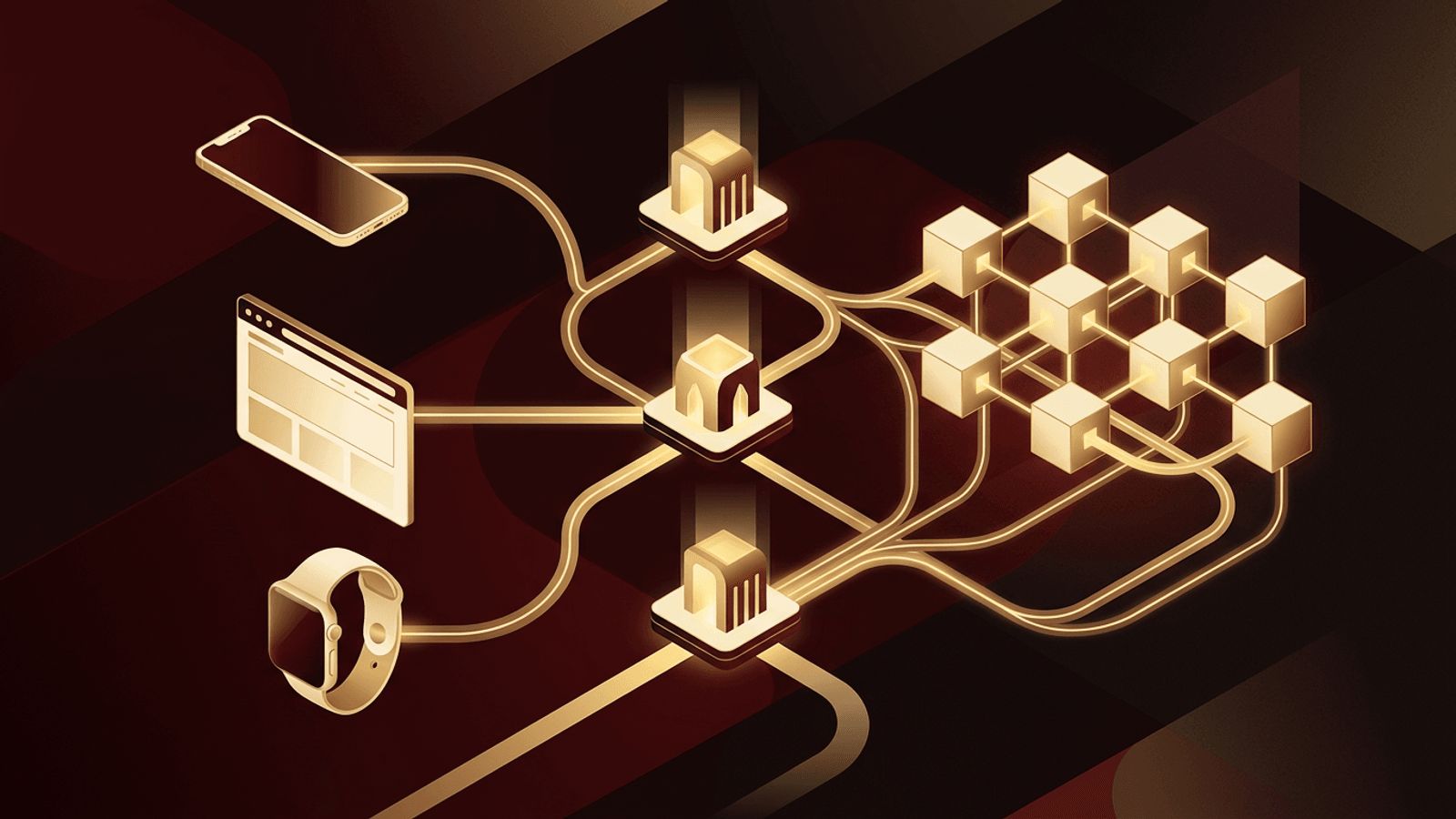
Outside of tech, BFF means "best friend forever." In web development, however, BFF stands for Backend for Frontend, an architectural pattern that has become increasingly popular as applications serve multiple types of clients, such as web browsers, mobile apps, smartwatches, and smart TVs. Each of these clients has different needs, and a single, general-purpose API often struggles to serve them all efficiently. The BFF pattern solves this by creating a dedicated backend layer for each frontend. This article explains what BFF is, how it works, its benefits and trade-offs, and when you should consider using it.
How AAMAX.CO Designs Scalable Architectures for Modern Applications
Choosing the right architecture early can save significant time and cost as an application grows. AAMAX.CO is a full-service digital marketing company offering web development, digital marketing, and SEO services worldwide. Their engineers design application architectures, including BFF layers, APIs, and microservices, that keep frontends fast and backends maintainable. With their web application development services, they build multi-platform solutions that deliver optimized experiences on every device while remaining easy to evolve over time.
What Is the Backend for Frontend Pattern?
The Backend for Frontend pattern introduces an intermediary server layer between client applications and backend services. Instead of every client calling the same general-purpose API, each client type gets its own BFF. For example, a company might have one BFF for its web application, another for its iOS and Android apps, and another for a partner integration.
Each BFF is designed around the specific needs of its frontend. It aggregates data from multiple backend services, transforms it into the exact format the client requires, and handles client-specific concerns such as authentication flows, caching, and error handling. The pattern was popularized by engineers working on large-scale systems who found that a one-size-fits-all API created friction between frontend and backend teams.
Why the BFF Pattern Emerged
Modern applications often rely on microservices, where functionality is split into many small, independent services, such as user profiles, product catalogs, orders, payments, and recommendations. A single page in a frontend might need data from five or more services. Without a BFF, the client must make multiple network requests, combine the results, and filter out unnecessary data. This leads to slower performance, especially on mobile networks, and more complex frontend code.
Different clients also need different data. A desktop web page might display detailed product information, reviews, and recommendations, while a smartwatch app needs only an order status. A general-purpose API either returns too much data for some clients or too little for others. The BFF pattern tailors responses to each client.
How a BFF Works
When a client makes a request, it communicates only with its dedicated BFF. The BFF then calls the relevant backend services, often in parallel, aggregates the results, removes unnecessary fields, and returns a single, optimized response. It may also handle tasks such as session management, token exchange, rate limiting, and caching. In many modern frameworks, server-side route handlers or server functions effectively act as a BFF for the web frontend.
Benefits of the BFF Pattern
- Optimized performance: Fewer network calls and smaller payloads improve load times, particularly on mobile devices.
- Simpler frontend code: Data aggregation and transformation move to the server, keeping client code clean and focused on the user interface.
- Team autonomy: Frontend teams can own and evolve their BFF without waiting for changes to shared backend APIs.
- Improved security: Sensitive tokens and credentials can stay on the server rather than being exposed in the browser, and internal service details remain hidden from clients.
- Tailored experiences: Each platform receives exactly the data and behavior it needs.
- Easier evolution: Changes for one client do not risk breaking others, since each has its own backend layer.
Drawbacks and Challenges
- Code duplication: Multiple BFFs may implement similar logic, leading to repeated code if not managed carefully.
- Increased infrastructure: More services mean more deployments, monitoring, and operational overhead.
- Risk of business logic creep: BFFs should focus on presentation-related concerns. Placing core business rules in BFFs can create inconsistencies across platforms.
- Latency from extra hops: Adding a layer introduces an additional network step, although this is usually offset by reduced client requests.
BFF vs. API Gateway vs. GraphQL
An API gateway is a single entry point that routes requests to backend services and handles cross-cutting concerns like authentication and rate limiting. A BFF is more client-specific and focuses on shaping data for one frontend. Some architectures use both, with BFFs sitting behind a gateway. GraphQL offers another solution by letting clients request exactly the data they need through a flexible query language. Teams sometimes use GraphQL as their BFF layer or choose it instead of building separate BFFs.
When Should You Use a BFF?
The BFF pattern is most valuable when your application serves multiple client types with different requirements, relies on several backend services or microservices, and has separate teams working on frontends and backends. It is also useful when you want to keep authentication tokens securely on the server. For small applications with a single frontend and simple backend, a BFF may add unnecessary complexity.
Best Practices for Implementing BFFs
Keep each BFF thin and focused on client-specific concerns. Share common logic through libraries or shared services to reduce duplication. Assign ownership of each BFF to the team that builds the corresponding frontend. Implement robust monitoring, logging, and error handling. Use caching strategically to reduce load on backend services and improve response times.
Conclusion
In web development, BFF stands for Backend for Frontend, a pattern that gives each client application its own tailored backend layer. By aggregating and shaping data for specific frontends, BFFs improve performance, simplify client code, strengthen security, and empower teams to move faster. While the pattern introduces additional infrastructure, it is a powerful solution for multi-platform applications built on complex backend systems.
