

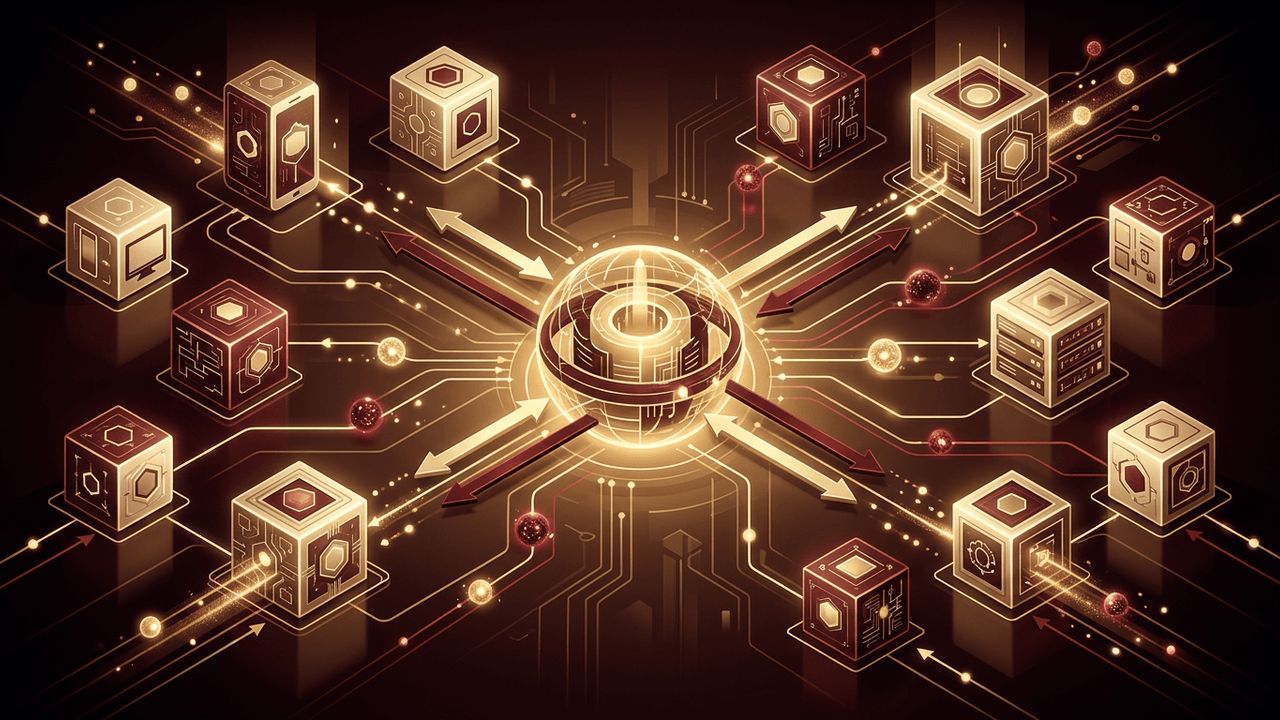
Modern digital experiences rarely rely on a single system. When you book a flight, the airline website checks seat availability, processes your payment, and sends a confirmation email, often using several different systems behind the scenes. These systems communicate through web services. Web services are the invisible connectors that allow software applications, regardless of programming language or platform, to exchange data over the internet. In this guide, we explain what is a web service, how it works, the main types, and how businesses use web services to build connected, efficient solutions.
Building Connected Solutions with AAMAX.CO
Web services are at the heart of integrated websites and applications. AAMAX.CO is a full-service digital marketing company offering web development, digital marketing, and SEO services worldwide. They design and integrate web services that connect websites with payment gateways, CRMs, inventory systems, marketing platforms, and custom databases. Their web application development team builds secure, scalable services that help businesses automate workflows and deliver seamless experiences across every platform their customers use.
What Is a Web Service?
A web service is a standardized way for two software applications to communicate with each other over a network, usually the internet. One application, called the client, sends a request, and another application, called the server or service provider, processes that request and returns a response. Web services use common protocols such as HTTP and data formats such as XML or JSON, which allows systems built with different technologies to understand each other.
For example, a weather app on your phone may not collect weather data itself. Instead, it sends a request to a weather web service, which returns current conditions and forecasts that the app then displays.
How Web Services Work
The basic process follows a request-and-response model:
- The client application creates a request specifying what data or action it needs.
- The request is sent over the internet to the web service endpoint, a specific URL.
- The web service authenticates the request, processes it, and interacts with databases or other systems if needed.
- The service sends back a response containing the requested data or a confirmation of the action.
- The client application uses the response to update its interface or continue its process.
Because the communication follows agreed standards, the client does not need to know how the service is built internally.
Key Characteristics of Web Services
- Interoperability: Systems built on different platforms and languages can communicate.
- Standard protocols: Communication uses widely accepted standards like HTTP, XML, and JSON.
- Loose coupling: Applications remain independent and can be updated separately.
- Reusability: A single service can support many different applications.
- Accessibility: Services can be accessed from anywhere with network connectivity.
Types of Web Services
SOAP Web Services
SOAP, which stands for Simple Object Access Protocol, is a protocol that uses XML to structure messages. It includes strict standards for security, transactions, and error handling, making it popular in enterprise environments such as banking, healthcare, and government systems. SOAP services are typically described using WSDL, a document that defines available operations and data structures.
RESTful Web Services
REST, or Representational State Transfer, is an architectural style rather than a strict protocol. RESTful services use standard HTTP methods such as GET to retrieve data, POST to create data, PUT or PATCH to update data, and DELETE to remove data. They commonly exchange data in JSON format, which is lightweight and easy to read. REST is the most widely used approach for modern web and mobile applications because of its simplicity and performance.
GraphQL
GraphQL is a query language for APIs that lets clients request exactly the data they need in a single request. It reduces over-fetching and under-fetching of data and is increasingly used in complex applications with diverse data requirements.
gRPC and Other Approaches
gRPC is a high-performance framework that uses protocol buffers for efficient communication, often between internal microservices. Webhooks are another pattern, where a service automatically sends data to a client when a specific event occurs.
Web Services vs. APIs
The terms web service and API are often used interchangeably, but there is a subtle difference. An API, or Application Programming Interface, is any defined way for software components to interact. A web service is a type of API that specifically operates over a network using web protocols. In other words, all web services are APIs, but not all APIs are web services.
Real-World Examples of Web Services
- Payment processing through providers like Stripe or PayPal
- Maps and location data from mapping services
- Social media sign-in and sharing features
- Shipping rate calculations and package tracking
- Email delivery and marketing automation
- Currency conversion and financial data feeds
Benefits of Web Services for Businesses
Web services allow businesses to integrate best-in-class tools rather than building everything from scratch. They enable automation between systems, reduce manual data entry, and provide consistent data across websites, mobile apps, and internal platforms. They also support scalability, since services can be upgraded or replaced independently as needs evolve.
Security Considerations
Because web services exchange data over networks, security is critical. Best practices include using HTTPS encryption, authenticating requests with API keys or OAuth tokens, validating all input, limiting request rates, and logging activity for monitoring. Properly secured services protect both business data and customer information.
Conclusion
So, what is a web service? It is a standardized method that enables different applications to communicate and exchange data over the internet. From SOAP and REST to GraphQL and webhooks, web services power the integrations behind payments, maps, logins, and countless other features we use every day. For businesses, they unlock automation, efficiency, and connected customer experiences that are essential in today's digital world.
