

Websites are part of everyday life, yet many people have never thought about how they are actually created. Behind every homepage, online store, and blog is a combination of planning, design, development, content creation, and technical infrastructure. Whether you are a business owner planning your first website or simply curious about the process, understanding how websites are created can help you make better decisions and communicate more effectively with designers and developers. While every project is different, most websites follow a similar journey from idea to launch.
How AAMAX.CO Creates Professional Websites
Creating a website that looks great and delivers results requires expertise at every stage. AAMAX.CO is a full-service digital marketing company offering web development, digital marketing, and SEO services worldwide. Their team guides clients through strategy, design, development, content, and launch, ensuring every website is fast, secure, responsive, and optimized for search engines. Through their website development service, they turn ideas into fully functional websites built to support long-term business growth.
Step 1: Defining Goals and Planning
Every website begins with a purpose. Planning involves identifying the website's goals, target audience, and key features. Will the site sell products, generate leads, provide information, or showcase a portfolio? Planners research competitors, define the required pages, and create a sitemap that outlines how pages connect. This stage also includes setting budgets, timelines, and success metrics.
Step 2: Choosing a Domain Name
A domain name is the address people type to reach a website, such as example.com. Choosing a memorable, brand-relevant domain is an important early step. Domains are registered through domain registrars and renewed annually. Many businesses choose domains that match their company name or describe their services.
Step 3: Wireframing and Design
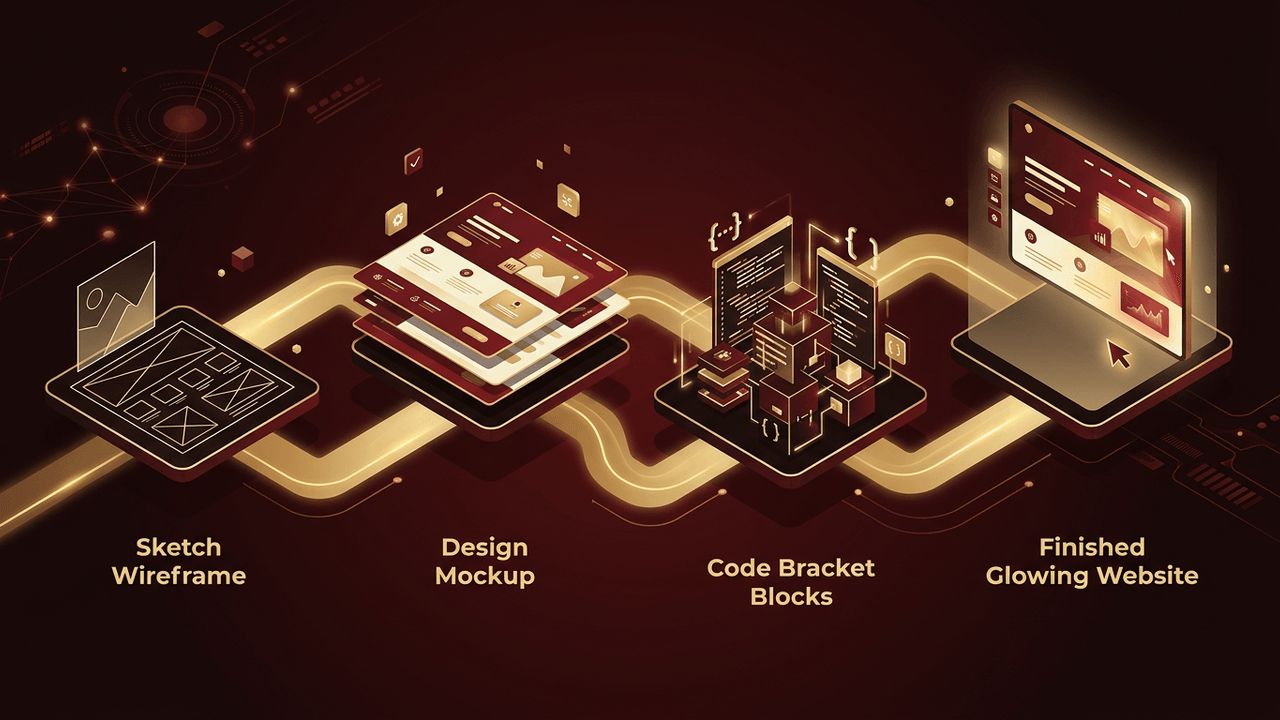
Designers create wireframes, which are simple blueprints showing the layout of each page. Wireframes focus on structure and content placement rather than visual style. Once approved, designers produce detailed mockups that include colors, typography, imagery, buttons, and branding elements. Design tools such as Figma allow teams to create interactive prototypes and gather feedback before development begins.
Step 4: Front-End Development
Front-end development turns designs into the parts of a website users see and interact with. Developers use three core technologies:
- HTML structures content such as headings, paragraphs, images, and links
- CSS styles the content with colors, fonts, spacing, and layouts
- JavaScript adds interactivity, animations, and dynamic behavior
Many developers also use frameworks and libraries such as React, Vue, or Tailwind CSS to build interfaces more efficiently. Responsive techniques ensure the website works on phones, tablets, and desktops.
Step 5: Back-End Development
The back end powers the website behind the scenes. It includes servers, databases, and application logic that handle tasks such as storing user accounts, processing orders, managing content, and sending emails. Common back-end languages include PHP, JavaScript with Node.js, Python, and Ruby. Databases such as MySQL and PostgreSQL store information that websites retrieve and display.
Using a Content Management System
Many websites are built on content management systems such as WordPress, Drupal, or headless CMS platforms. A CMS provides an interface where non-technical users can add and edit content without writing code. Developers customize themes and plugins to match designs and add functionality, combining ease of use with flexibility.
Step 6: Content Creation
Content is the heart of a website. It includes written copy, images, videos, graphics, and downloadable resources. Effective content explains what a business offers, answers customer questions, and encourages action. Content should be written with both users and search engines in mind, using relevant keywords naturally and following a clear structure.
Step 7: Search Engine Optimization
SEO ensures people can find the website through search engines. Developers optimize page titles, meta descriptions, headings, URLs, images, and site speed. They create XML sitemaps, implement structured data, and ensure the site is mobile-friendly. Building SEO into the creation process is far more effective than adding it later.
Step 8: Testing and Quality Assurance
Before launch, websites undergo extensive testing. Teams check functionality, forms, links, page speed, browser compatibility, mobile responsiveness, accessibility, and security. Any bugs or issues are fixed to ensure a smooth experience for visitors.
Step 9: Hosting and Launch
To be accessible online, a website must be stored on a web server provided by a hosting company. Developers upload files and databases to the server, connect the domain name, install an SSL certificate for security, and configure performance settings. Once everything is verified, the website goes live and is submitted to search engines for indexing.
Step 10: Maintenance and Improvement
Creating a website does not end at launch. Regular maintenance includes software updates, security monitoring, backups, content updates, and performance optimization. Analytics tools track visitor behavior, revealing opportunities to improve design, content, and conversions over time.
Conclusion
Websites are created through a structured process that includes planning, domain registration, design, front-end and back-end development, content creation, SEO, testing, hosting, and ongoing maintenance. Each step plays an important role in building a website that is attractive, functional, and effective. Working with experienced professionals ensures every stage is handled with care, resulting in a website that supports your goals for years to come.
