

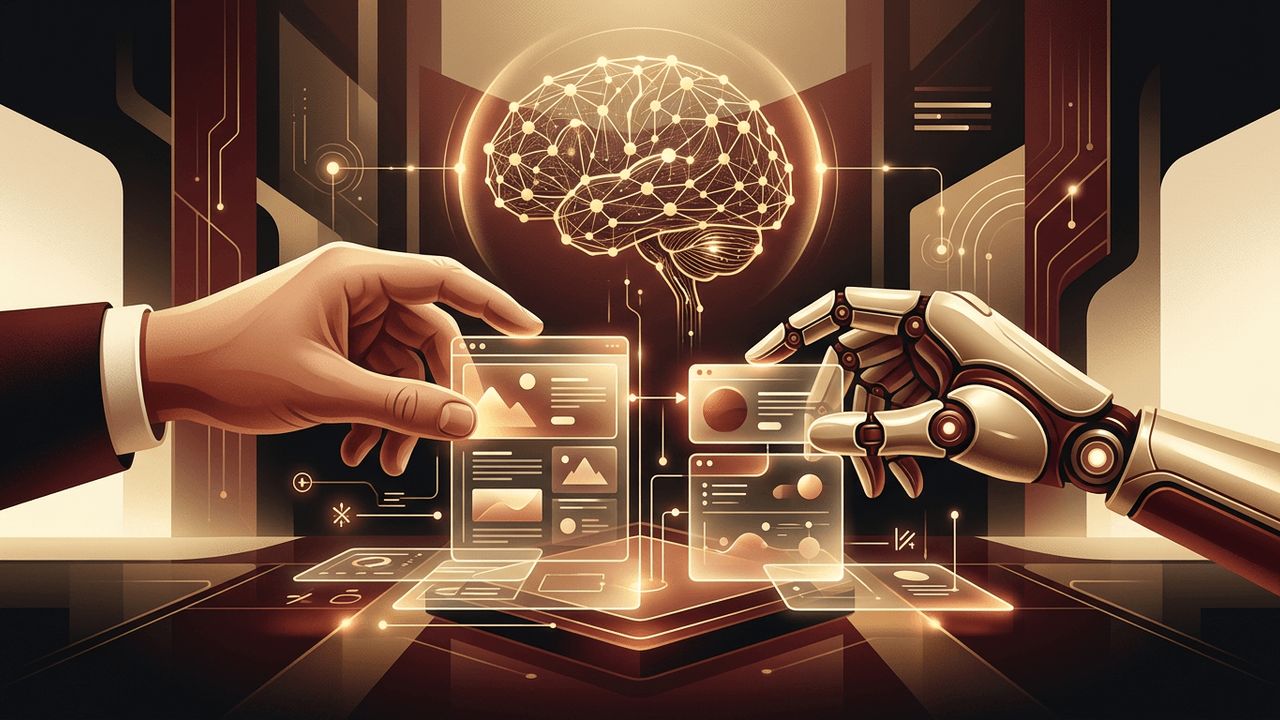
Artificial intelligence has made remarkable progress in software development. AI assistants can now generate components, write functions, explain code, fix bugs, and even scaffold entire websites from a simple text prompt. Naturally, this has raised an important question for business owners and professionals alike: does AI replace web developers? The honest answer is that AI is changing the job dramatically, but it is not eliminating the need for skilled developers. Instead, it is shifting their focus away from repetitive tasks and toward architecture, problem solving, quality control, and business understanding. In this article, we look at what AI does well, where it falls short, and what the future holds for web development.
How AAMAX.CO Uses Technology and Human Expertise Together
Modern web projects benefit most when AI efficiency is guided by human judgment. AAMAX.CO is a full service digital marketing company providing web development, digital marketing, and SEO services worldwide. Their developers stay current with modern tools and workflows, while still applying the strategic thinking, quality assurance, and client communication that AI cannot replicate. They focus on building secure, scalable, and search-optimized websites that align with real business goals. Organizations that want the speed of modern development without sacrificing reliability can rely on them to deliver thoughtfully engineered solutions.
What AI Can Do in Web Development
AI tools excel at pattern-based work. They can generate boilerplate code, create standard UI components, write unit tests, suggest fixes for common errors, convert designs into markup, and translate code between languages. For many routine tasks, AI dramatically reduces the time developers spend typing and searching documentation.
AI-powered website builders can also produce simple landing pages and prototypes quickly. For a basic brochure site or an early concept, these tools can deliver usable results in minutes.
Where AI Falls Short
Understanding Business Context
AI does not truly understand a company's goals, customers, competitive landscape, or brand voice. Developers translate business requirements into technical solutions, often asking clarifying questions that AI would not think to ask.
Complex Architecture
Designing scalable systems involves tradeoffs between performance, cost, security, and maintainability. AI can suggest patterns, but deciding which architecture fits a unique situation requires experience and judgment.
Quality and Security
AI-generated code can contain subtle bugs, outdated practices, or security vulnerabilities. Without careful review, these issues can reach production. Developers remain responsible for testing, validating, and securing the code that runs real businesses.
Integration and Debugging
Real projects involve third-party APIs, legacy systems, payment gateways, and unique data structures. When things break in unexpected ways, developers investigate, reason about root causes, and craft fixes that AI may not anticipate.
How the Developer Role Is Changing
Rather than writing every line by hand, developers are becoming orchestrators. They describe intent to AI tools, review generated output, refine it, and integrate it into larger systems. This shift places greater value on skills such as system design, code review, communication, testing, and domain expertise. Developers who embrace AI often become significantly more productive, delivering more features in less time.
Will AI Reduce the Number of Developer Jobs?
Some entry-level tasks may become automated, and teams may accomplish more with fewer people on certain projects. However, history shows that productivity tools tend to expand demand rather than eliminate it. As building software becomes faster and cheaper, more businesses invest in custom websites, applications, and digital experiences. This creates new opportunities, especially for developers who combine technical skills with strategic thinking. Demand for sophisticated web application development continues to grow as companies digitize more of their operations.
What Businesses Should Know
For businesses, AI can reduce costs on simple projects, but it is not a substitute for professional expertise on websites that drive revenue. A poorly structured website can suffer from slow performance, accessibility problems, security risks, and weak SEO. Working with experienced developers who use AI responsibly gives you the best of both worlds: faster delivery and dependable quality.
Skills Developers Need in an AI World
- Strong fundamentals in HTML, CSS, JavaScript, and modern frameworks
- System design and architecture planning
- Critical code review and testing practices
- Security awareness and data protection knowledge
- Effective prompting and AI tool proficiency
- Clear communication with clients and stakeholders
The Human Advantage
Creativity, empathy, and accountability remain uniquely human strengths. Developers understand the frustration of a user struggling with a confusing checkout process, the urgency of a client facing a launch deadline, and the ethical responsibility of protecting personal data. These qualities guide decisions that go far beyond generating syntax. AI is a powerful assistant, but people remain responsible for outcomes.
Final Thoughts
AI is not replacing web developers; it is redefining their work. Routine coding tasks are increasingly automated, while the value of strategic thinking, architecture, and quality assurance continues to rise. Developers who adapt and use AI as a productivity partner will thrive, and businesses that combine AI efficiency with human expertise will build faster, smarter, and more reliable websites. The future of web development is not human versus machine, but human and machine working together.
