

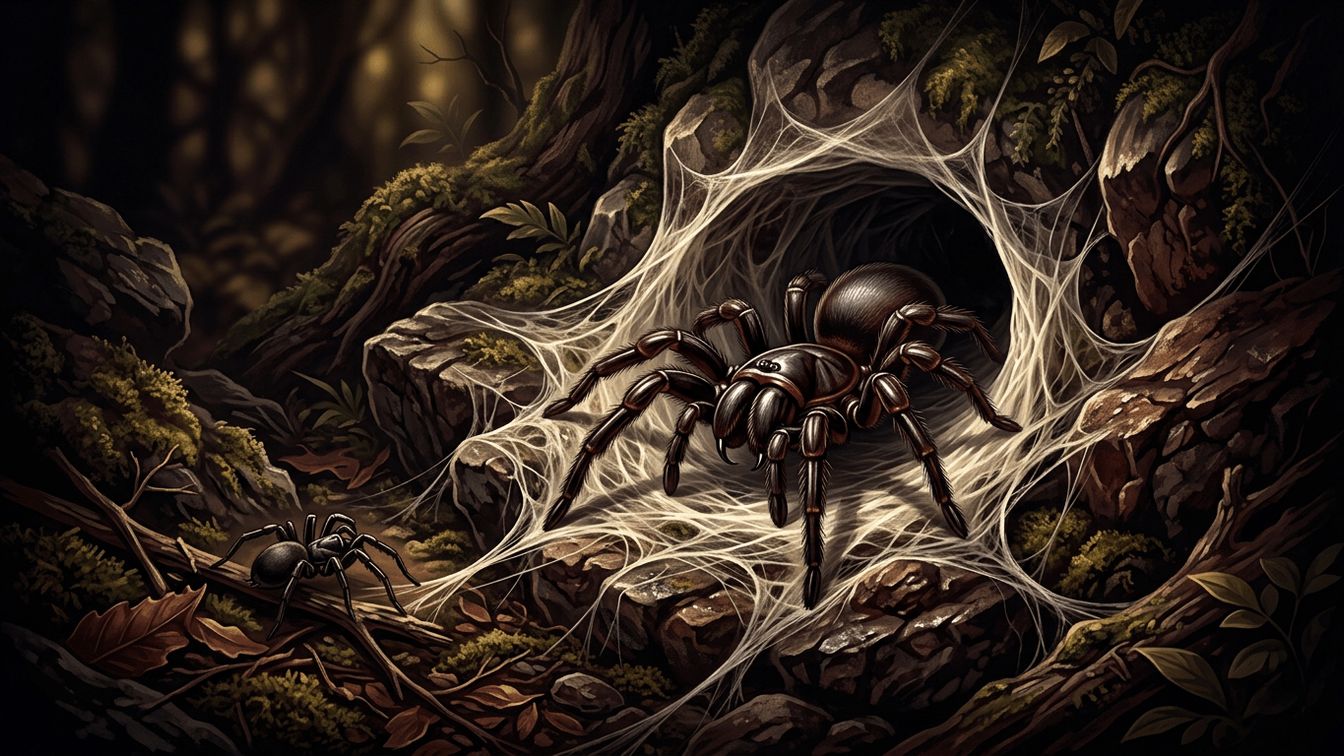
The animal kingdom is full of dramatic mating behaviors, but few are as notorious as sexual cannibalism in spiders. When people learn about Australia's infamous funnel-web spiders, a common question arises: do female funnel webs eat the male? The answer is that it can happen, but it is not inevitable. Female funnel-web spiders are larger, more aggressive, and may attack and consume males during or after courtship. However, many males escape successfully. This article explores the biology behind this behavior, how male funnel webs try to survive, and what it reveals about these remarkable creatures.
AAMAX.CO: Helping Nature and Science Websites Reach Their Audience
Educational content about wildlife attracts curious readers from around the world, but it needs a strong digital presence to reach them. AAMAX.CO is a full-service digital marketing company offering web development, digital marketing, and SEO services worldwide. They help wildlife educators, museums, nature bloggers, and pest management businesses build engaging websites that present scientific information clearly and rank well in search engines.
Meet the Funnel-Web Spider
Australian funnel-web spiders belong to the family Atracidae and include dozens of species, the most famous being the Sydney funnel-web spider. They are large, glossy, dark spiders that live in burrows or crevices lined with silk, often with trip lines radiating from the entrance. They are considered among the most dangerous spiders in the world because the venom of some species, particularly the male Sydney funnel-web, can be life-threatening to humans. Thanks to antivenom developed in the 1980s, deaths are now extremely rare.
Differences Between Male and Female Funnel Webs
- Size: Females are typically larger and heavier-bodied, while males are slimmer with longer legs.
- Lifestyle: Females spend most of their lives in or near their burrows. Mature males leave their burrows to search for mates.
- Lifespan: Females can live for many years, sometimes over a decade. Males often die within months of reaching maturity.
- Venom: In the Sydney funnel-web, male venom contains a toxin especially dangerous to primates, including humans.
How Funnel-Web Spiders Mate
During warm, humid months, mature males wander in search of female burrows. They detect females using chemical cues such as pheromones on silk. When a male finds a burrow, he approaches cautiously and signals his presence, often by tapping or vibrating the silk. If the female is receptive, the male uses specialized structures on his legs called tibial spurs to hold back the female's fangs during mating. He transfers sperm using his pedipalps, which he loaded beforehand.
Do Females Really Eat the Males?
Sexual cannibalism has been observed in funnel-web spiders, but it is not a universal outcome. If the female is hungry, not receptive, or perceives the male as prey, she may attack. Males that fail to communicate properly or linger too long after mating are at greater risk. Many males mate successfully and leave, sometimes seeking additional females. Because males have a short life after maturity anyway, the evolutionary cost of occasional cannibalism is lower than it might appear.
Why Sexual Cannibalism Happens
Scientists have proposed several explanations for sexual cannibalism in spiders:
- Nutritional benefit: Consuming a male provides protein that can improve egg production.
- Mate choice: Females may reject and eat males they consider unsuitable.
- Aggressive spillover: Females that are naturally aggressive hunters may struggle to suppress that instinct.
- Mistaken identity: A male's approach can resemble that of prey.
Male Survival Strategies
Male funnel webs have evolved several strategies to improve their chances. Tibial spurs help restrain the female's fangs. Careful courtship signals communicate that the male is a mate, not a meal. Males often mate quickly and retreat immediately afterward. These adaptations show how strongly evolution shapes behavior when survival and reproduction are at stake.
Why Males Are Often Encountered by People
Wandering males are the funnel webs most frequently found in homes, garages, swimming pools, and gardens, especially after rain. Because male Sydney funnel-web venom is particularly dangerous, encounters during mating season warrant caution. Anyone bitten should apply a pressure immobilization bandage and seek emergency medical help immediately.
The Importance of Accurate Wildlife Information Online
Dramatic topics like spider cannibalism attract many searches, but misinformation is common. Reliable websites with clear explanations, quality images, and scientific references help readers understand the truth. Effective website design makes complex topics engaging and easy to navigate, while strong website development ensures fast loading, mobile-friendliness, and accessibility for audiences around the world.
Fascinating Funnel-Web Facts
- Funnel-web spiders can survive underwater for hours by trapping air bubbles on their bodies.
- Antivenom is produced by "milking" live spiders, often collected through public programs.
- Most funnel-web species are found along Australia's east coast.
- Their venom is being studied for potential medical uses, including treatments for stroke.
Conclusion
Female funnel-web spiders do sometimes eat males, but it is not a guaranteed part of mating. Sexual cannibalism occurs when females are hungry, unreceptive, or aggressive, and males have evolved clever strategies such as tibial spurs and careful courtship to reduce the risk. Understanding these behaviors reveals the complex balance between survival and reproduction in the natural world. For educators and businesses sharing such fascinating knowledge, presenting accurate information through a well-built website ensures it reaches and informs curious readers everywhere.
