

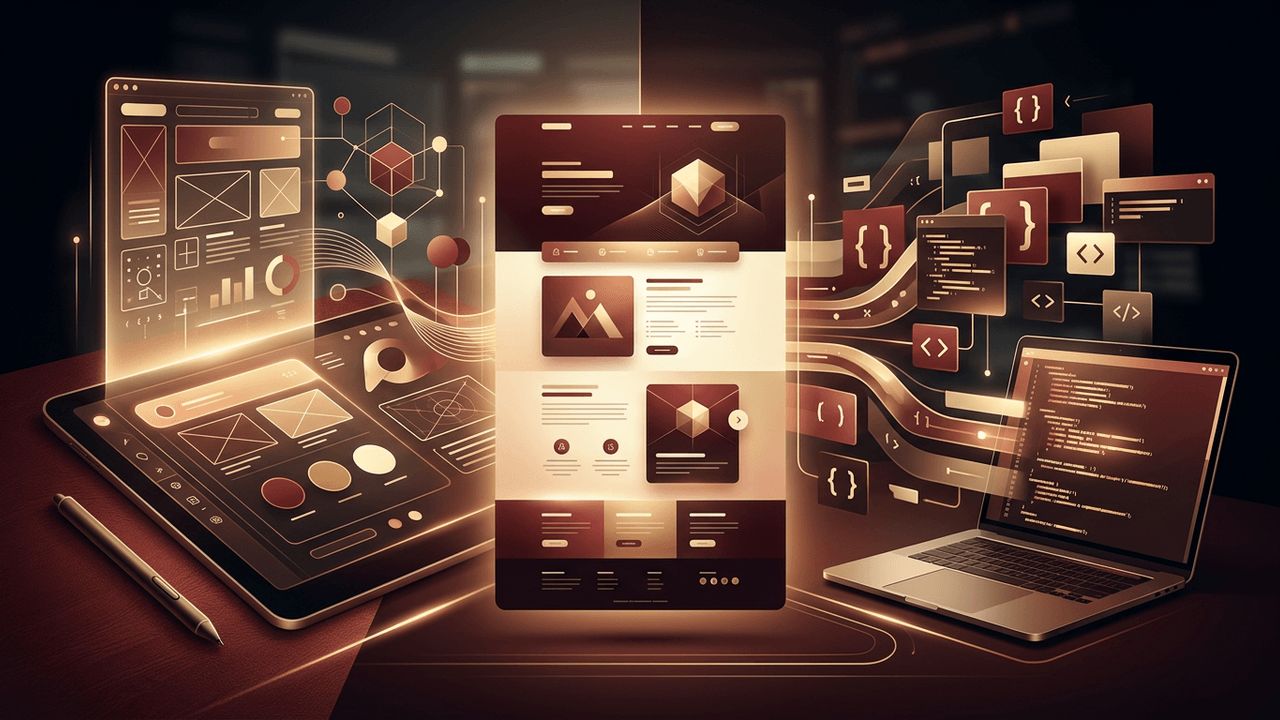
The line between web design and web development has been blurring for years. Designers are expected to understand how their layouts behave in a real browser, and developers are increasingly asked to make thoughtful visual decisions. This naturally raises a popular question: can you be a web designer and developer at the same time? The short answer is yes. Many successful professionals, often called hybrid designers, full-stack creatives, or "unicorns," handle both disciplines with confidence. However, combining these roles requires a deliberate approach to learning, a clear understanding of where each skill set begins and ends, and the discipline to keep growing in two fast-moving fields.
How AAMAX.CO Helps Businesses That Need Both Design and Development
While individuals can certainly become hybrid professionals, businesses often need a complete team that excels at both disciplines simultaneously. AAMAX.CO is a full service digital marketing company that offers web development, digital marketing, and SEO services worldwide. Their team combines creative designers and experienced engineers who collaborate from the first wireframe to the final launch. Whether a brand needs polished website design that reflects its identity or robust engineering behind the scenes, they deliver both under one roof, ensuring the visual experience and the technical foundation work seamlessly together.
Understanding the Difference Between Web Design and Web Development
Before deciding to take on both roles, it helps to understand what each one involves. Web design focuses on the look, feel, and usability of a website. Designers work on layout, typography, color systems, imagery, user flows, and accessibility. They often use tools such as Figma, Adobe XD, or Sketch to create wireframes, prototypes, and high-fidelity mockups.
Web development, on the other hand, is about turning those designs into functional websites. Front-end developers write HTML, CSS, and JavaScript to build what users see and interact with, while back-end developers handle servers, databases, authentication, and application logic. A designer answers the question "How should this look and feel?" while a developer answers "How do we make this work reliably?"
Why More Professionals Are Choosing a Hybrid Path
There are several reasons the hybrid role has become so attractive. First, modern tools make it easier to move between design and code. Design systems, component libraries, and frameworks such as Tailwind CSS speak a shared language that both designers and developers understand. Second, small businesses and startups often cannot afford separate specialists, so a professional who can do both becomes extremely valuable.
Third, hybrid professionals produce more cohesive work. When the same person designs and builds a feature, there are fewer handoff mistakes, fewer misunderstandings about spacing or animation, and a faster path from idea to finished product. Finally, combining skills can increase earning potential, especially for freelancers who can offer end-to-end services to clients.
Essential Skills for a Web Designer and Developer
To succeed in both roles, you need a balanced foundation. On the design side, focus on visual hierarchy, typography, color theory, responsive layouts, user experience principles, and accessibility standards. Learning to create wireframes and interactive prototypes in a modern design tool is essential.
On the development side, start with semantic HTML, modern CSS including Flexbox and Grid, and JavaScript fundamentals. From there, many hybrid professionals learn a front-end framework such as React, Vue, or Svelte. Understanding version control with Git, basic performance optimization, and how to deploy a website are also critical. If you want to go further, back-end knowledge with Node.js, databases, and APIs can turn you into a true full-stack creative.
Challenges of Doing Both Roles
Being a designer and developer is rewarding, but it comes with real challenges. The biggest is time. Both fields evolve quickly, with new design trends, frameworks, and best practices emerging every year. Keeping up with both requires consistent learning and a willingness to prioritize.
Another challenge is context switching. Design work often requires open-ended creative thinking, while development demands focused logical problem-solving. Jumping between these modes can be mentally draining. Many hybrid professionals solve this by batching tasks, dedicating certain days or blocks of time to design and others to coding.
There is also the risk of becoming a generalist who is average at both rather than excellent at either. The solution is usually to develop a "T-shaped" skill set: broad competence across both disciplines, with deep expertise in one area such as front-end development or UI design.
How to Start Your Journey
If you are currently a designer, begin learning HTML and CSS by recreating your own designs in code. This immediately shows you how layouts behave across screen sizes and builds empathy for developers. If you are a developer, study design fundamentals and practice redesigning existing websites. Online courses, design challenges, and open-source projects are excellent ways to build experience.
Build a portfolio that demonstrates both skill sets. Include case studies that show your design process from research to wireframes, followed by the live, coded result. Employers and clients love seeing a professional who can carry a project from concept to deployment.
Career Opportunities for Hybrid Professionals
Hybrid skills open many doors. Common job titles include UI engineer, design technologist, front-end designer, product designer with coding skills, and creative developer. Agencies value hybrid team members because they can bridge communication between design and engineering teams. Startups appreciate them because they can ship complete features independently. Freelancers benefit because they can take on entire website projects without subcontracting.
When to Bring in a Professional Team
Even skilled hybrid professionals reach a point where a project is too large or complex for one person. Enterprise websites, e-commerce platforms, and custom applications often require specialized expertise in security, scalability, SEO, and integrations. In those cases, partnering with an experienced agency that provides professional website development ensures the project is delivered on time and built to last.
Final Thoughts
So, can you be a web designer and developer? Absolutely. With dedication, structured learning, and plenty of practice, you can master both the creative and technical sides of building websites. The hybrid path offers greater creative control, stronger career opportunities, and more cohesive results. Start with strong fundamentals, build real projects, and keep learning as both disciplines evolve. And when a project demands a full team of specialists, remember that experienced agencies are ready to help bring ambitious ideas to life.
